
Article Summary
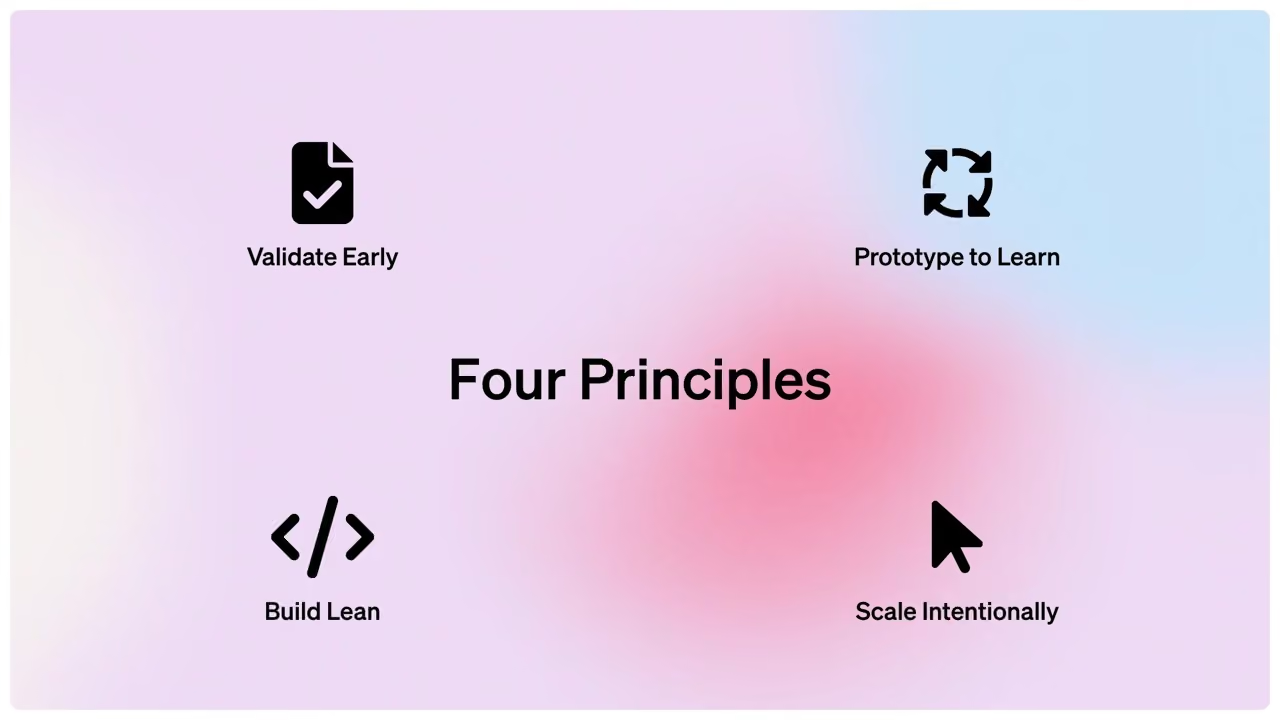
Most lean product development content reads like a textbook. This is what it looks like with boots on the ground. These four principles, validate early, prototype to learn, build lean, and scale intentionally, are the core principles we come back to with every product team we work with. They sound simple. Getting teams to actually follow them is the hard part.
Key Takeaways
- 42% of failed startups cite no market need. Validation is the cheapest investment you can make, and the one most teams skip.
- An MVP is a 24 to 72 hour experiment, not a beta product with a modest feature set. If it took months, it wasn't an MVP.
- Prototyping is iterative, not linear. Stay in the loop of prototype, test, analyze, and define until you've removed as much ambiguity as possible.
- 80% of features in an average product are rarely used. Prototyping surfaces which ones matter before you commit development resources.
- Design fixes are orders of magnitude cheaper than development fixes. A designer moving something 100 pixels costs minutes. A developer doing the same costs hours.
- 60 to 70% of a product's lifetime budget goes to maintenance. Scaling too early locks you into maintaining features nobody asked for.
- 12% of features drive 80% of daily usage. Let the data decide what gets built next, not the loudest person in the room.
- Feature flags and painted doors let you validate demand for a feature before writing a single line of code.
Related Video
Full Article
96% of businesses never make it past the first plateau
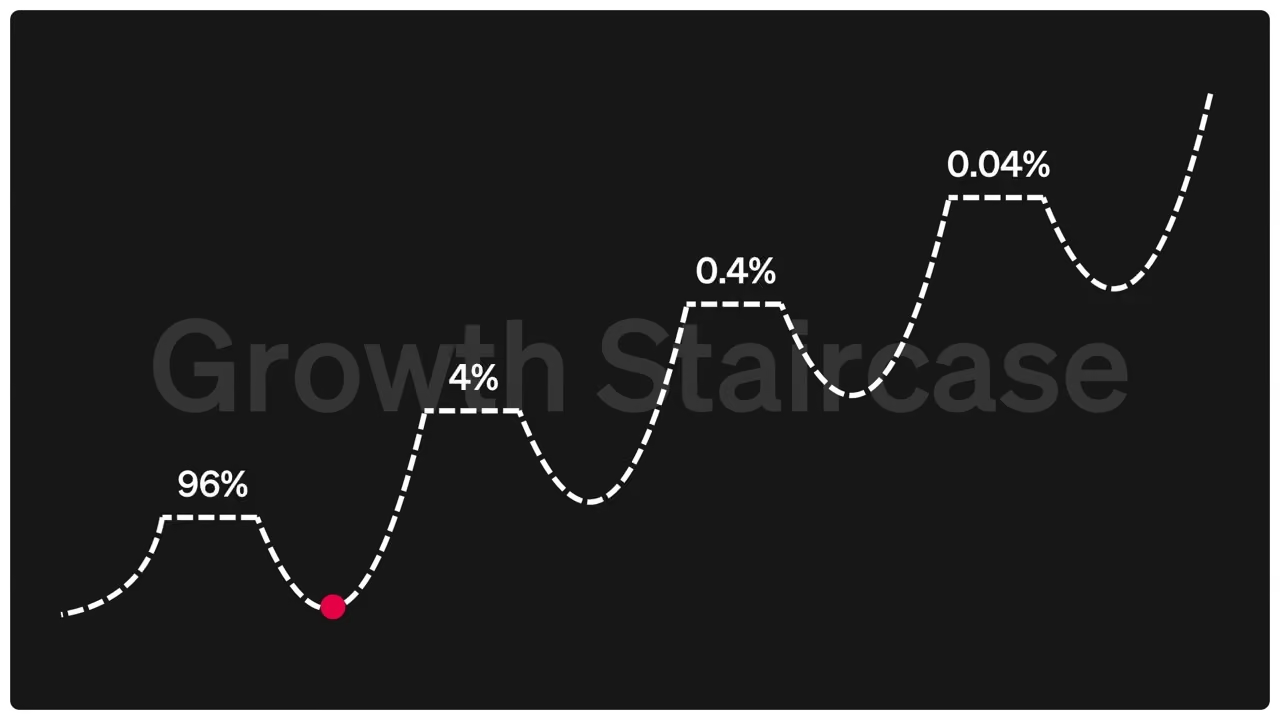
There's a growth curve that shows up in almost every startup and product strategy deck. Most businesses cluster around the same revenue plateau, and when they try to jump to the next one, they hit what people like to call the Valley of Death.
I prefer to call it the Valley of Innovation. You're burning resources, capital, time, and focus to get to that next stage. That's not death. That's the most innovative period your business will go through. The question is whether you survive it.
We work with product teams across B2B organizations, from early stage products to mature platforms shipping new features. The context varies. Sometimes it's a company building their first client facing digital product. Sometimes it's a team with an existing platform that's grown unwieldy and needs to ship a new capability without adding more technical debt. The lean product development principles we keep coming back to are the same regardless of company size or product maturity. There are more than four, but these four come up in every engagement, and they show up across our broader digital strategy, UX, and product design resources.
Principle 1: Validate early
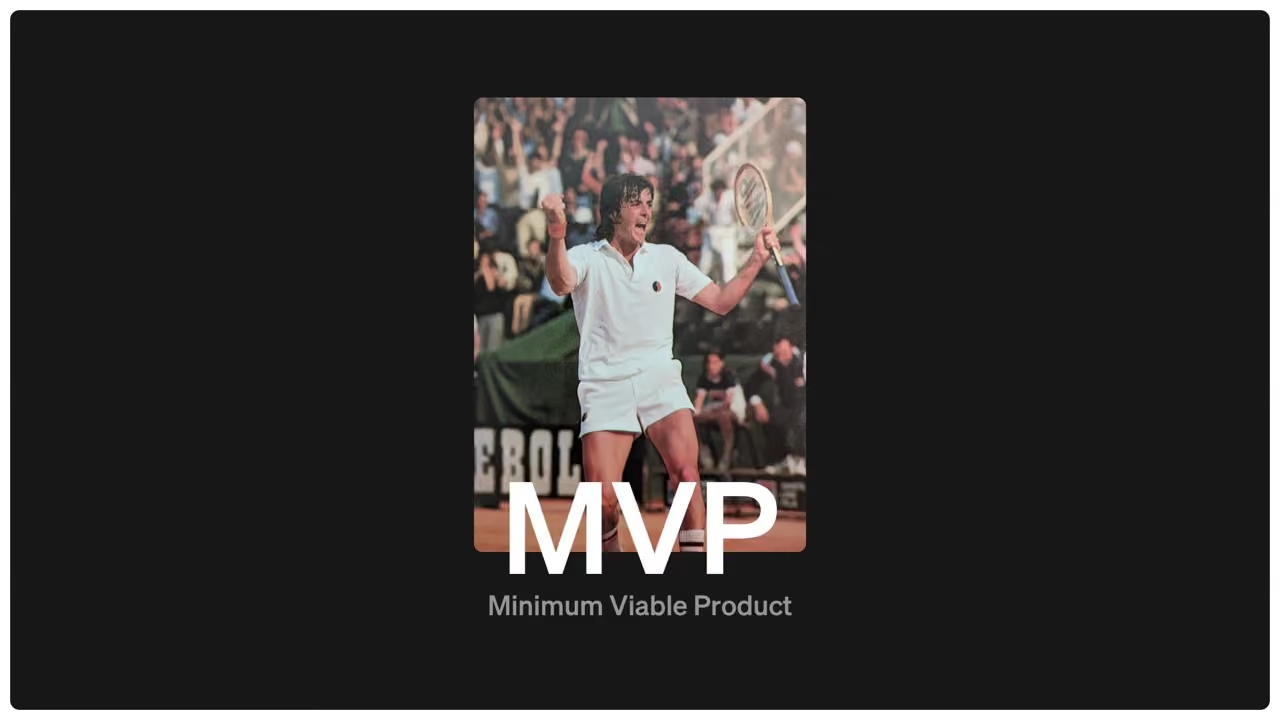
The first reality check: 42% of failed startups cite no market need as the reason they failed. They didn't test anything. They didn't talk to users. They didn't talk to prospects. They just built.
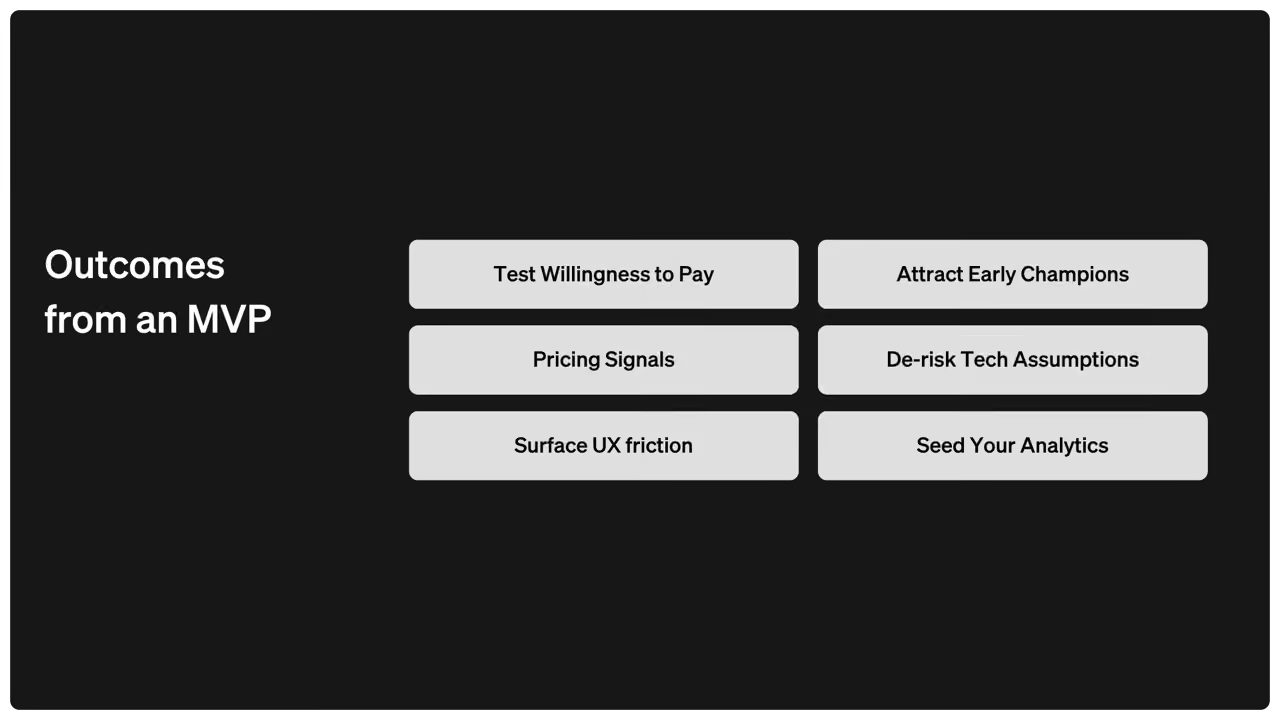
The antidote to this is the MVP (Minimum Viable Product). We've written about what MVPs actually are and why they matter for customer experience in depth before, so I won't rehash the full philosophy here. The short version: an MVP exists to test willingness to pay, attract early champions, surface UX friction, and de-risk your technical assumptions. If you solve this problem, will people pay for it? Will they use it? That's the whole question.
The problem we see constantly is that teams say "MVP" but deploy something that's clearly a beta or a first product launch. They put real marketing dollars behind it. They staff up around it. That's not minimum viable. An MVP should be cardboard, paper, popsicle stick level scrappy. Dropbox validated with a three minute explainer video and no product at all. Their wait list went from 5,000 to 75,000. Airbnb was an air mattress in an apartment during a conference. Groupon ran on WordPress, manually creating PDFs and emailing them to users.
An MVP is something you deliver in 24 to 72 hours. If it took longer than that, it probably wasn't one. Even tools like Lovable that speed up the development process should produce something scrappy, not something that looks finished. Do not waste time perfecting something that no one needs.
Principle 2: Prototype to learn
Your MVP was a success. You've validated the need. Now you prototype. This is where I spend the most of my time with teams.
Write your product requirements first. Even a short list gives your product designer something to follow. We see a lot of teams skip this step entirely and jump into prototyping without any shared understanding of what they're building. The reasoning is usually speed, they want to "just start designing." But prototyping without requirements is how you end up with something that looks great and solves the wrong problem. The requirements document doesn't need to be long. A page is fine. It just needs to exist so everyone on the product team is working from the same brief.
The bigger issue is that most teams treat prototyping as linear. Brief goes in, prototype comes out, everyone reviews it once, and it moves to development. That's the 10,000 foot view. The reality is prototyping should be a tight iterative loop: prototype, test, analyze, define, then back to prototyping. Stay in that cycle until you've weeded out as much ambiguity as possible.
The business case for this is straightforward. 80% of features in an average product are rarely ever used. Teams who prototype well routinely report less rework and faster time to market. McKinsey's 'Business Value of Design' research found up to 30% reduction in development costs and 50% faster time to market for companies that invest in design and prototyping early. And the math on design changes versus development changes is stark. A designer moving an element 100 pixels to the right or relocating it to a different screen takes minutes. Getting a developer to open their IDE, recode, reposition, deploy, and test the same change is dramatically more expensive. AI is closing that gap, but the ratio still holds.
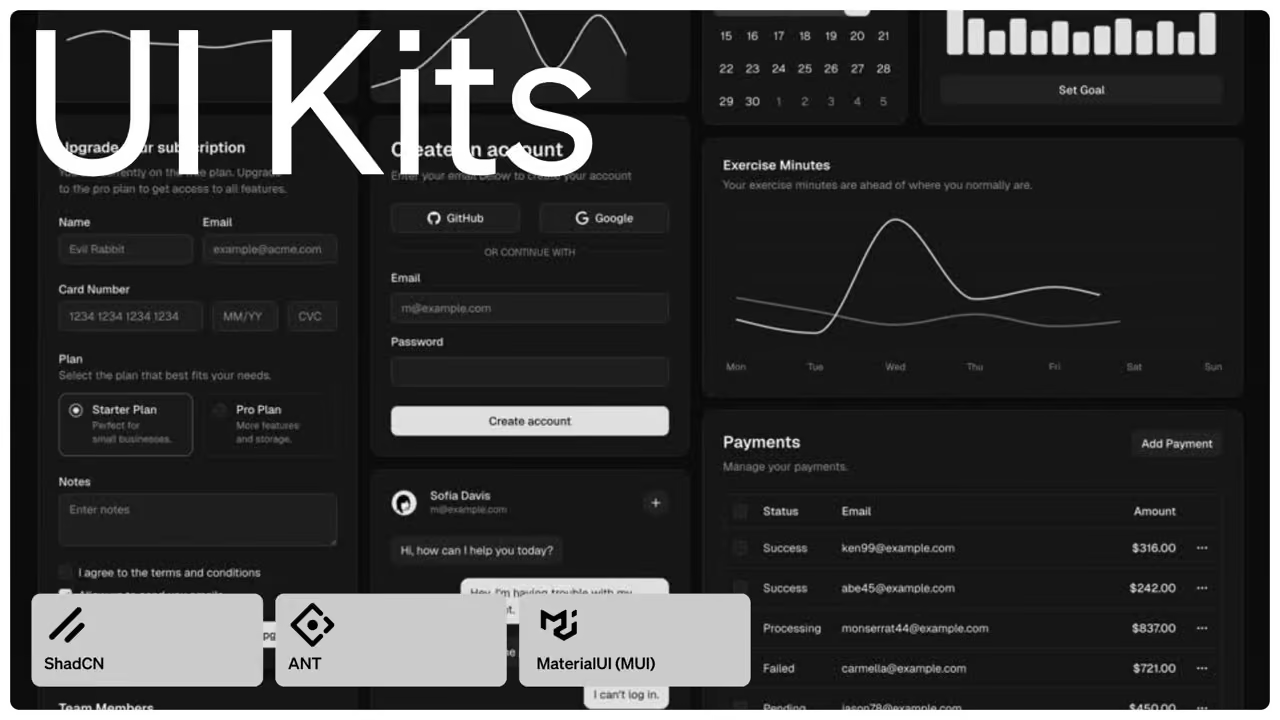
You don't need to start from scratch. Component libraries like ShadCN, Ant Design, and Material UI get your design team moving quickly with reusable, drag and drop components. Most of these libraries also have companion code systems, so your developers get the same head start. But the real value of prototyping is user testing. Tools like Maze let you put a prototype in front of real users and collect both quantitative and qualitative data on how they interact with your product design. What users tell you and what they actually do are two very different things. You need both signals, especially as design and development processes converge with AI-driven tools.
Sketch first, polish later. Stay rough as long as possible because low fidelity prototypes are easy to change. As you move to higher fidelity, applying brand, building out a design system, the cost of change goes up. Even design debt accumulates. Stay in the sketch phase until you're confident enough to commit.
Principle 3: Build lean
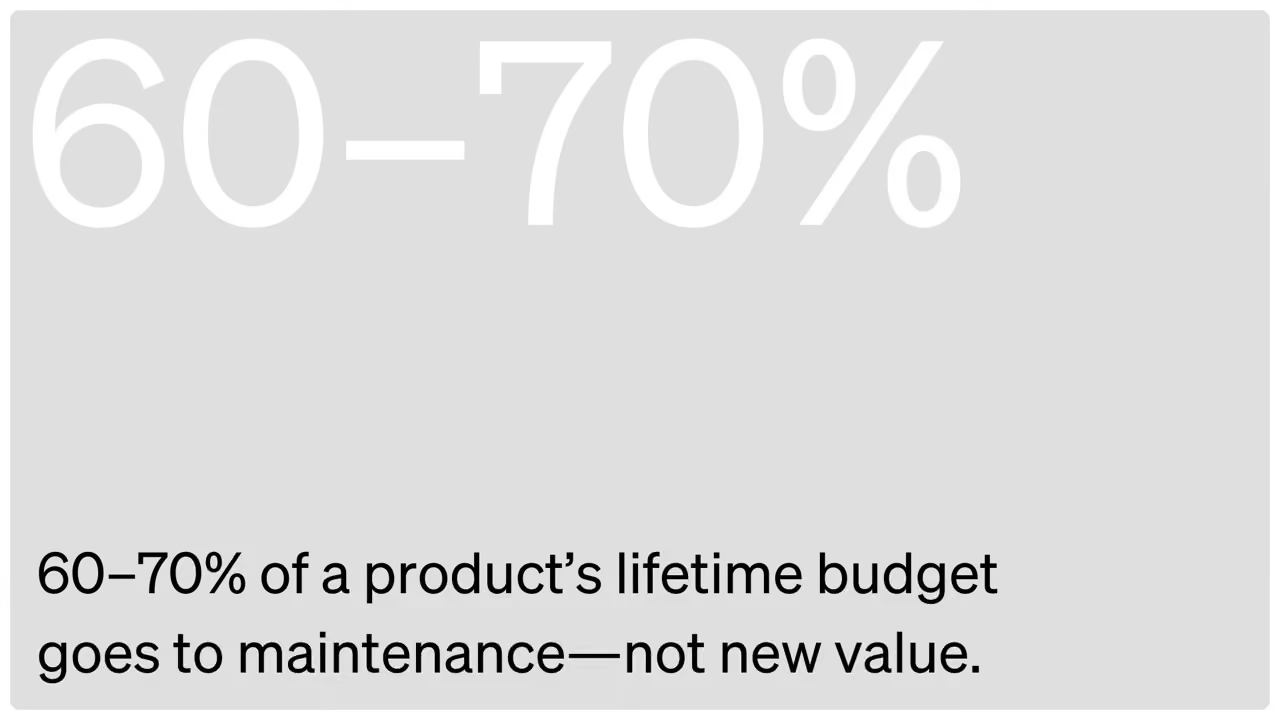
60 to 70% of a product's lifetime cost goes to maintenance. That number should reframe how you think about your product budget. If you scale too early and build too much infrastructure before you've validated what your users actually need, you end up maintaining features nobody uses. That's where most product budgets go to die.
We see this pattern with a lot of B2B product teams. They build for 10,000 users when they have 10. The technology to support scale can come later. What matters early is that the core experience works for your first cohort.
Remember the Groupon example. Behind the curtain it was chaos, manual PDF creation, swivel chair operations, people emailing things by hand. Their users never knew. They latched on to the service and the value. The behind the scenes chaos is perfectly normal at this stage and it's temporary.
The principle here is assemble, don't invent. There's an enormous ecosystem of low code, no code, and API tools that let you stitch together a working product before you write custom code. Authentication, payments, notifications, scheduling, file storage. Someone has already built reliable, scalable versions of all of these. Use them. Custom build the parts that create your unique value. Wizard of Oz the rest.
This is where lean product development and lean product design overlap. The product design decisions you make at this stage determine your maintenance costs for years. Every custom built component is a component your team has to maintain, document, and debug. The question to ask for each piece of functionality: is this the thing that makes our product different? If the answer is no, find a service or library that handles it and move on. Focus your engineering time on the pieces that only you can build.
Principle 4: Scale intentionally
12% of features drive 80% of daily usage. That stat alone should make every product manager pause before greenlighting the next feature request.
Once you have a product in the market with real users, the temptation is to build everything everyone asks for. That's how products bloat, slow down, and lose the clarity that made them useful in the first place. You need systems to resist that pull.
Instrument everything. Install the tools to collect feedback and behavioral data. Combine qualitative insights (what people say they want) with quantitative signals (what they actually do). These two data sets will regularly contradict each other. Users will tell you they want a dashboard with more customization options, then analytics will show that 90% of them never change the default view. That contradiction is where the real product insights live.
Score the opportunities. We use RICE, a prioritization framework that evaluates Reach, Impact, Confidence, and Effort. It produces a numerical score, which is useful because it removes emotion from the decision. It's a signal, not a mandate, but it's a much better starting point than whoever argued loudest in the last meeting.
Then ship lean experiments. One of the most effective tactics is the painted door. Put a button in your navigation or on your landing page. "Sign up for the beta." "Join the waitlist." You're testing whether users are interested in a feature before you build it. You collect demand signals with zero development investment. If the interest is there, build it. If the button gets ignored, you've saved yourself weeks of work and the ongoing maintenance burden that comes with every shipped feature.
Data is the antidote to gut feel. And sometimes the smartest product decision is deletion.
A note on AI prototyping tools
During a recent talk, someone asked a question that keeps coming up in product conversations. They'd been using AI tools like Lovable to build prototypes, and the prototypes looked finished. Polished. Real. Their stakeholders and early users started treating them like the actual product. "It looks done, let's ship it."
The problem is that what they had was a proof of concept. It looked like a product, but it didn't have the backend or the infrastructure to operate at any real volume. This is a new communication challenge that AI tools have introduced. When your prototype looks production ready, you need to be explicit with your audience about what stage you're actually at.
Frame it as a proof of concept. Tell your stakeholders: we have something to play with, we've validated the need, and now we need to build the real infrastructure to scale.
The language matters. "This is proof that we should invest" lands differently than "this is almost done." One leads to smart product development. The other leads to premature scaling.
Frequently Asked Questions (FAQ)
What's the difference between an MVP, a proof of concept, and a prototype?
An MVP tests willingness to pay. A proof of concept tests whether a technical approach is feasible. A prototype tests usability and design. Teams conflate them constantly, especially now that AI tools can produce something that looks like all three at once.
How long should an MVP take to build?
24 to 72 hours. If you're spending weeks, you've moved past MVP territory into beta. The discipline is keeping scope ruthlessly small, even when tools like Lovable make it easy to build more.
How do you convince stakeholders that a scrappy MVP is worth it?
Lead with risk. Building without validation is the expensive move. 42% of failed startups cite no market need. Show them the Dropbox example: a three minute video, no product, and a wait list that grew 15x.
What tools do you recommend for prototyping and user testing?
Figma for prototyping, paired with component libraries like ShadCN, Ant Design, or Material UI. Maze for user testing. Most teams don't need more than that to get meaningful data on their product design.
How do you decide which features to build next?
RICE framework: Reach, Impact, Confidence, Effort. It produces a numerical score that depersonalizes the conversation. Pair it with behavioral analytics and qualitative feedback, and you have a clear picture of where to invest.
When should you stop prototyping and start building?
When your team can articulate the core user problem, the solution, and the expected outcome without hedging. If people in the room are still picturing different products, keep prototyping.
Is lean product development only for startups?
These lean principles apply to any team building a digital product. The stakes are actually higher for mid-market B2B companies because the budgets are bigger and the cost of building the wrong thing compounds into years of maintenance.