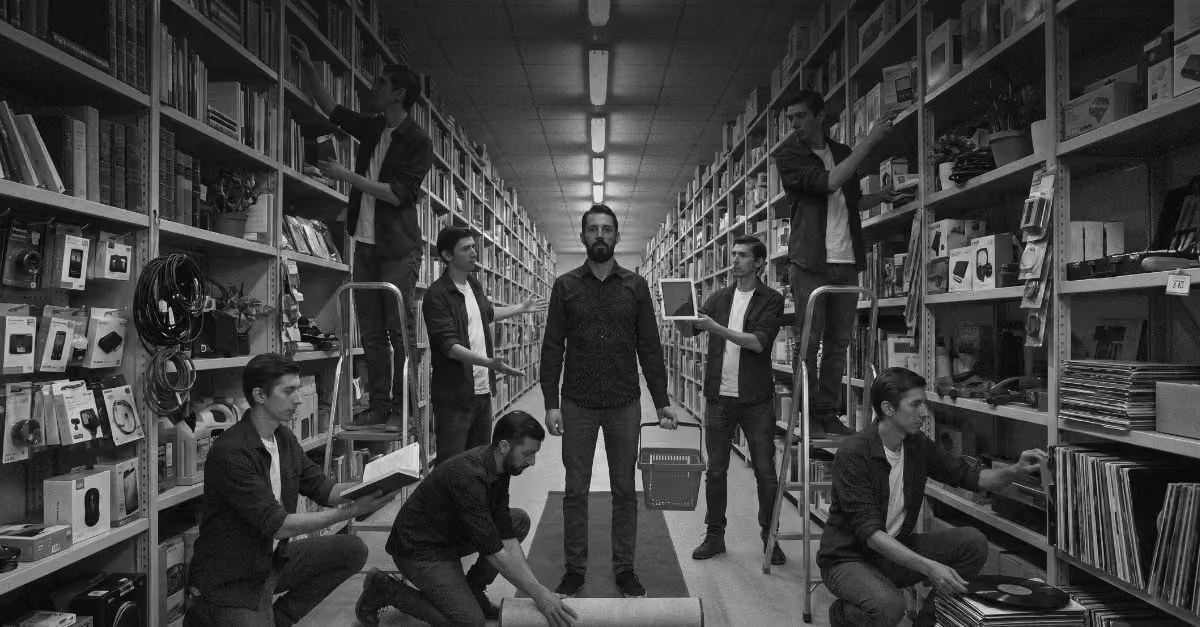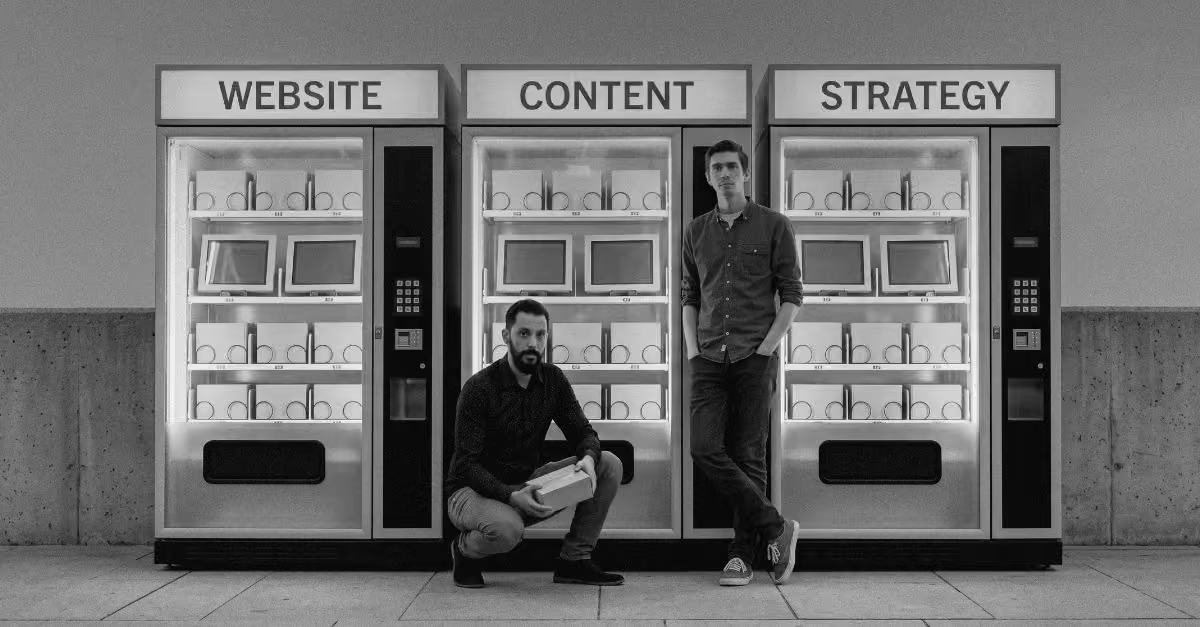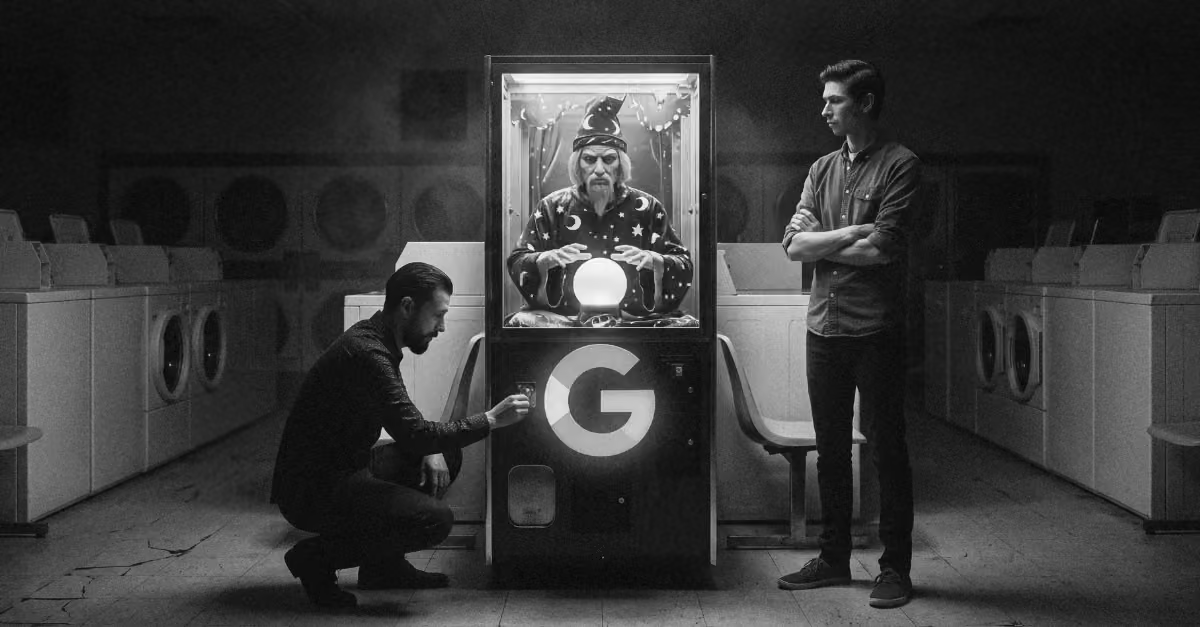


Article Summary
Every product team says they want speed. But when a one month feature stretches into a quarter and a quarter becomes half a year, the problem is rarely the team. It's the system around them. Product timelines slip when there's no governance, no sequencing, and no shared definition of done. The fix starts before anyone opens a design file.
Key Takeaways
- Product timelines don't slip because teams are slow. They slip because planning was skipped or half-committed.
- Thinking and making at the same time is one of the most common reasons product work drags. Discovery has to happen before execution starts.
- Feature creep usually isn't about bad ideas. It's about having no framework (like RICE scoring) to decide which ideas actually matter right now.
- Investor-clients and senior leadership can derail a product roadmap when every feature request gets treated as urgent. That turns a product company into a services company.
- Stakeholder alignment is the first deliverable, not a box to check. If everyone at the table is picturing something different, there is no agreement.
- Sequencing discipline is what separates teams that ship from teams that spin. Less scope, done well, beats a sprawling backlog that never closes.
- The hardest part of product isn't building. It's what comes after launch: the feature requests, the bug fixes, the operationalizing of something that now has real users.
Related Video
Full Article
The one month feature that takes a quarter
We hear it constantly from product teams. A design change or a new feature that should take a month stretches into a quarter. A quarter turns into half a year. And somehow that feels normal.
It shouldn't. But the reasons it happens are so baked into how product teams operate that nobody questions them anymore.
At Tennis, we work with product teams, founders, and internal design and dev groups on platforms, websites, and web applications, helping them build better digital experiences. We've seen the same patterns across companies at very different stages. The timelines aren't the problem. The systems around the timelines are.
No roadmap, no milestones, no constraints
Some teams land on a great idea and just start building. The design work, the product roadmap, the governance, all of it becomes an afterthought once momentum kicks in.
Without defined milestones, teams take liberties with what "complete" means. And because nothing in product is ever truly complete, you need constraints to force decisions. That's what milestones are for.
If there's no roadmap, there's no reason any given sprint ends when it does. People fill the time available. The work expands.
Thinking and making at the same time
This one is everywhere.
A team conceives of a feature, starts designing it, and begins implementation all in the same breath. That's doing the thinking while making. And it means you can take as long as you want because you're never operating against a defined scope.
The discovery phase exists to separate those two modes. You think first. You define the problem, map the users, identify what "done" looks like. Then you make.
When discovery gets skipped (or compressed into a kickoff meeting), the project inherits every unresolved question as a mid-build decision. That's where timelines bloat.
Feature creep isn't about bad ideas
Product managers deal with a constant stream of feature requests from users, from clients, from internal teams. The ideas aren't usually bad. The issue is there's no system for deciding which ones matter right now.
A framework like RICE scoring (Reach, Impact, Confidence, Effort) gives teams a baseline for prioritization, much like the resources, templates, and frameworks for digital teams we use with clients. How much of your user base does this feature affect? What's the expected impact? How confident are you that it solves a real problem? What's the level of effort?
Without that kind of scorecard, prioritization defaults to whoever has the loudest voice or the biggest title. The HiPPO effect (Highest Paid Person's Opinion) is real, and we've watched it derail teams at the enterprise level and in ten person startups alike.
When investor-clients steer the product
Here's one that doesn't get talked about enough. Some product companies onboard early clients who are also investors. They've committed capital. They're bankrolling the build.
The problem is those clients end up steering features. Every request they make, regardless of whether it aligns with the product roadmap, gets treated as urgent. The team drops everything to accommodate.
At that point, you're not running a product company. You're running a services company with product aspirations instead of investing in strategic product design and development. And the roadmap becomes whatever the loudest client needs this week.
Too many stakeholders, conflicting priorities
We talked to a product company years ago whose entire feature prioritization process was a Slack channel. Client conversations would generate feature ideas, they'd get dropped into the channel, and the only ones that moved forward were attached to revenue.
That's a system optimized for short term sales, not long term product health. User research, user feedback, core features that serve the broader user base, none of that gets prioritized when revenue urgency is the only filter.
Multiply that by multiple stakeholders with competing interests, and you get a team that's busy but not actually shipping anything coherent, even when they have access to solid digital strategy and UX guidance.
The post-launch problem nobody plans for
Building the product is the part people sign up for. What catches teams off guard is everything that comes after: the bug reports, the feature requests, the user feedback that contradicts your assumptions.
We see this in the build-in-public community too. Founders get exhausted post-launch because they didn't plan for operationalizing the product or for ongoing website optimization and support. They built the thing and expected to call it a day.
The hard part starts after launch. If there's no operating model for how you handle incoming requests, triage bugs, and sequence future development, the team burns out. That's a discovery problem, too. The discovery phase shouldn't just cover the initial build. It should define how the product gets operated.
What a discovery phase actually does
The discovery phase (we call it the Think Phase at Tennis) is the work that happens before anyone opens Figma or writes a line of code, often supported by discovery templates and planning tools.
It typically produces user personas based on actual user research, not assumptions. A sitemap and content model. Technical recommendations. A product roadmap with sequenced features. Scope and budget clarity, along with the foundation for comprehensive digital design services.
But the real output is alignment. When the product designer, the development team, and the key stakeholders all walk out of discovery with the same picture in their heads, the project moves faster. When they don't, every handoff becomes a negotiation.
Sequencing: less scope, more momentum
Every team we've worked with wants everything at once. All the features, all the pages, all the functionality. And they want it by the end of the quarter.
Sequencing is the discipline of doing less so you can do it well. Group features by dependency. Define what the minimum viable product looks like for each release. Ship incrementally and gather feedback between phases.
When we install our process inside a product team, it's like a mini operating system. We sequence features, define scope collaboratively, and create a release schedule that the design and development teams build together, supported by our broader UX and digital transformation services. The goal is incremental wins, not a single massive launch that takes a year and still misses the mark.
Three to five days that save three to five months
If you're struggling with timelines, take a breath. Commit three to five days of dedicated, collaborative planning before anyone starts building. Get the key stakeholders in the room. Map the work. Define what done means. Build the schedule together.
That collaborative plan is the first deliverable. And it's the one that makes every other deliverable possible.
It doesn't matter where you are in the product lifecycle. Net new product, existing website getting rebuilt, new features on a live platform that may require specialized development services across platforms. The answer is the same: stop, align, then move.
If everything is a priority, nothing is
Product timelines don't lie. They just reflect the decisions that weren't made and the degree to which your team truly embraces a holistic user experience mindset.
If you don't define what done means, there is no done. If you don't sequence the work, every feature competes with every other feature. If you don't separate thinking from making, the project takes as long as the team's patience allows, especially when you're tackling complex website design and development for marketing teams.
The fix isn't a better project management tool. It's governance. It's constraints. It's the willingness to plan before you build. That's where the real speed comes from.
Frequently Asked Questions (FAQ)
Why do product timelines always seem to slip?
Teams skip the planning work that defines scope and priorities. Without a roadmap and clear constraints, "done" never gets defined, features expand beyond their original intent, and competing stakeholder priorities pull the work apart.
What is a discovery phase in web design and product development?
The discovery phase is the strategic work before any design or development begins. It produces user personas, sitemaps, technical recommendations, and scope clarity. The real output is alignment: everyone involved walking out with the same picture in their heads.
How does feature creep affect product timelines?
New ideas get added without evaluating them against the existing roadmap. Without a prioritization framework, teams build whatever the loudest voice wants. Each unplanned feature compounds delays across the release schedule.
What is RICE scoring and how does it help product teams?
RICE scores features on Reach, Impact, Confidence, and Effort. It gives product managers a structured way to compare requests instead of relying on gut feel or internal politics.
How can product teams prevent stakeholder conflicts from derailing projects?
Treat alignment as the first deliverable. Identify key stakeholders early, get explicit agreement on priorities and scope before execution starts. When everyone works from the same plan, mid-project conflicts drop.
What does sequencing mean in product development?
Ordering features and releases so the team ships incrementally instead of building everything at once. Group by dependency, define what a minimum viable release looks like, and ship smaller focused releases instead of one massive launch.
When should a product team invest in a discovery phase?
At any stage. New product, existing product expansion, or a team struggling with timelines and missed handoffs. If priorities are competing and scope keeps shifting, discovery was either skipped or needs revisiting.